
What is it?
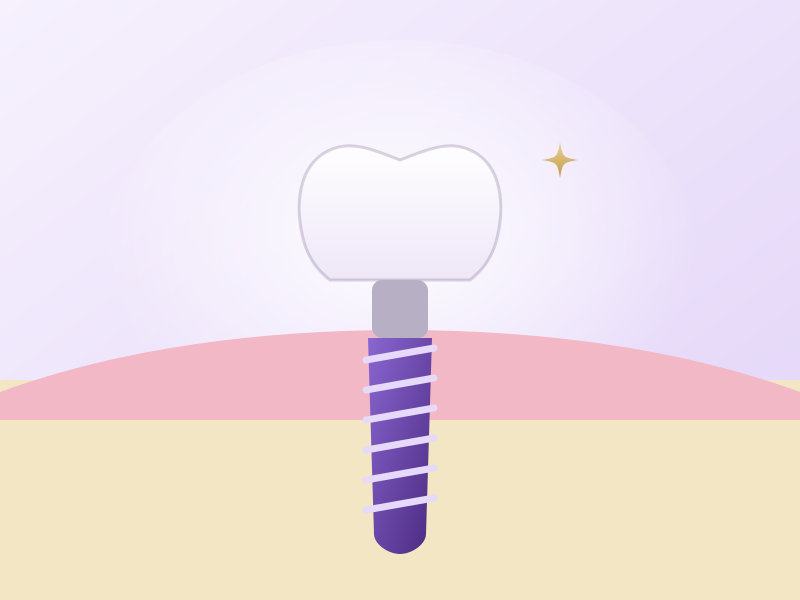
A dental implant is a small titanium post placed in the jawbone where a tooth is missing. Over the following months the bone heals around it. Then a connector (abutment) and a crown are attached. Implants can replace one tooth, several teeth, or support a denture.
When might you need it?
- One or more teeth are missing
- You prefer a fixed option instead of a removable denture
- Neighbouring teeth are healthy and you don’t want them prepared for a bridge
How it works
- Consultation, examination and X-rays or a scan to check the bone
- A treatment plan, including any extra steps such as bone grafting
- Placing the implant under local anaesthetic
- A healing period, usually a few months
- Fitting the abutment and the final crown
- Regular follow-up visits
Possible benefits
- A fixed tooth that doesn’t move
- Neighbouring teeth don’t need to be cut down
- Helps chewing and speaking with confidence
Limits and things to know
- It is a surgical procedure and involves healing time
- Not everyone is suitable — bone volume, gum health, smoking and some medical conditions matter
- Possible complications include infection, swelling or, rarely, the implant not integrating
- Implants need the same daily care as natural teeth to stay healthy
Aftercare
- Follow the post-operative instructions carefully in the first days
- Eat soft foods and avoid chewing on the area at first
- Avoid smoking — it slows healing
- Clean around the implant carefully every day
- Attend all follow-up visits
Questions about Dental implants
Does implant placement hurt?
It is done under local anaesthetic. Some swelling or discomfort for a few days afterwards is common and is managed with the advice the dentist gives you.
How long does the whole process take?
It usually takes several months from placement to the final crown, depending on healing and whether extra steps are needed.
Can smokers have implants?
Smoking increases the risk of problems. The dentist will discuss your situation and how to reduce the risk.
Good to know
Whether an implant is right for you can only be decided after an examination and imaging. The dentist will explain the plan and alternatives such as bridges or dentures.
Every mouth is different. The right treatment, number of visits and results depend on an examination by the dentist.