
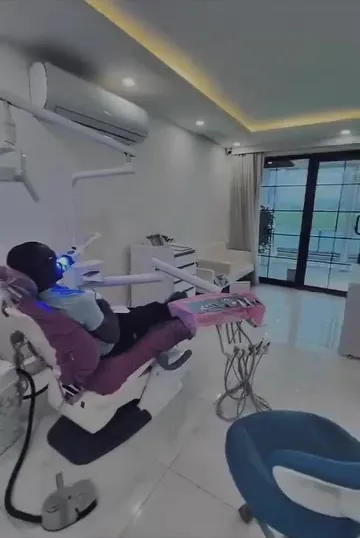
What is it?
The dentist protects your gums and applies a whitening gel to the front surfaces of the teeth. The gel breaks down stains inside the enamel to lighten the colour. Depending on the method, a light may be used and the session may be repeated. Whitening works on natural teeth only — fillings, crowns and veneers keep their colour.
When might you need it?
- Teeth have become yellow or darker over time
- Staining from coffee, tea or smoking
- Before a special occasion, after a check-up
- Before making new crowns or veneers, so they can match the new shade
How it works
- Examination to check for cavities, gum problems or sensitivity
- Choosing a realistic target shade together
- Cleaning, if needed, so the gel can work evenly
- Protecting the gums and applying the whitening gel
- Aftercare advice and, if needed, a follow-up session
Possible benefits
- A brighter, more even smile
- A simple treatment that doesn’t remove tooth structure
- Results that can be maintained with good habits
Limits and things to know
- Temporary sensitivity is common for a short time after whitening
- Results vary — some stains (for example from certain medicines or injury) respond less
- Fillings, crowns and veneers do not change colour
- Not recommended during pregnancy or for young children
- Colour can slowly darken again, especially with coffee, tea and smoking
Aftercare
- For the first 48 hours, avoid strongly coloured food and drinks (coffee, tea, cola, red sauces)
- Avoid smoking, especially in the first days
- Use a toothpaste for sensitive teeth if needed
- Keep regular check-ups and cleanings
Questions about Teeth whitening
Is whitening safe for my teeth?
When it is planned and supervised by a dentist after an examination, whitening is considered a safe cosmetic treatment for most adults. The dentist checks for problems first.
Will my teeth be sensitive?
Some people feel temporary sensitivity during or after whitening. It usually goes away within a few days. Tell the dentist if you already have sensitive teeth.
Will my fillings or veneers become whiter?
No. Whitening only changes natural tooth colour. Visible fillings or crowns may need replacing afterwards to match.
Good to know
How long whitening lasts differs from person to person. Habits such as smoking and drinking coffee or tea increase the chance of new staining. Your dentist can advise how to maintain your result.
Every mouth is different. The right treatment, number of visits and results depend on an examination by the dentist.