
What is it?
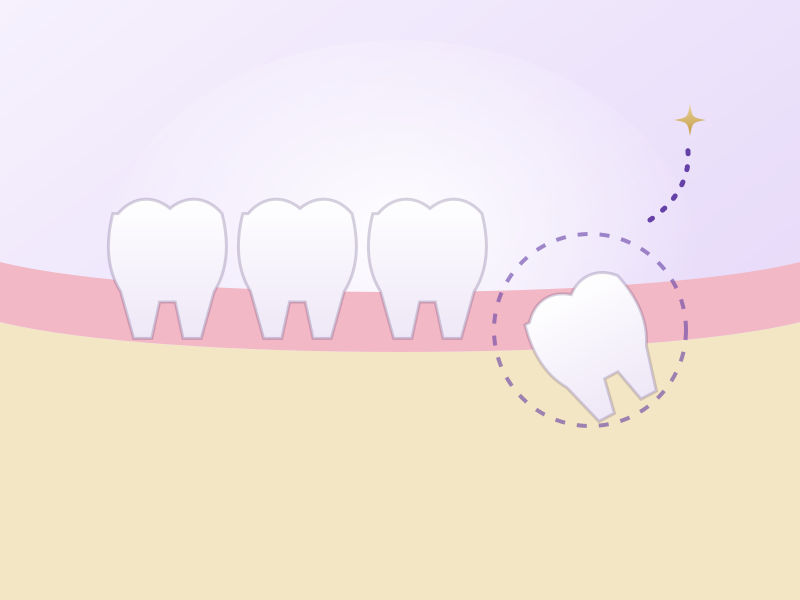
A wisdom tooth may come through normally, grow at an angle, or stay partly or completely under the gum and bone (impacted). The dentist examines the area and uses an X-ray to see its position before recommending monitoring, treatment of the gum, or removal.
When might you need it?
- Pain or pressure at the back of the jaw
- Swollen or sore gum around the back tooth
- An unpleasant taste or smell from that area
- Difficulty opening the mouth
- Repeated infections, or decay in the wisdom tooth or the tooth in front of it
How it works
- Examination of the area
- An X-ray to see the tooth and its roots
- Explaining the options: monitoring, treating the gum, or removal
- If removal is needed: local anaesthetic and a planned procedure
- Aftercare instructions and a follow-up if needed
Possible benefits
- Relief from pain and repeated infections
- Protecting the neighbouring tooth from decay and damage
- A clear plan based on the actual position of the tooth
Limits and things to know
- Swelling, discomfort and limited mouth opening for a few days after removal are common
- Dry socket (painful healing) can happen, especially in smokers
- Lower wisdom teeth are sometimes close to a nerve; the dentist checks this on the X-ray
- Some cases need referral for surgery
Aftercare
- Bite on the gauze as instructed to control bleeding
- Don’t rinse, spit forcefully or use a straw on the first day
- Use cold packs on the cheek for the first day to reduce swelling
- Eat soft, cool foods and avoid smoking
- From the next day, rinse gently with warm salt water after meals unless told otherwise
Questions about Wisdom teeth
Do all wisdom teeth have to come out?
No. Wisdom teeth that are healthy, fully through and easy to clean can often stay. The dentist decides after an examination and X-ray.
How long does recovery take?
Most people feel better within a few days to a week. Swelling is usually greatest on day two or three.
When is it urgent?
Go to emergency care immediately if swelling spreads toward the eye or neck, or you have difficulty swallowing or breathing, or a high fever.
Good to know
Not every wisdom tooth needs to be removed. The decision is made after an examination and an X-ray. Seek urgent care if swelling spreads, if you have difficulty swallowing or breathing, or a high fever.
Every mouth is different. The right treatment, number of visits and results depend on an examination by the dentist.