
Wisdom teeth: when do they need to come out?
Not every wisdom tooth must be removed. Signs of trouble, what an X-ray shows and how to recover well after extraction.
1 min read · 19 October 2026
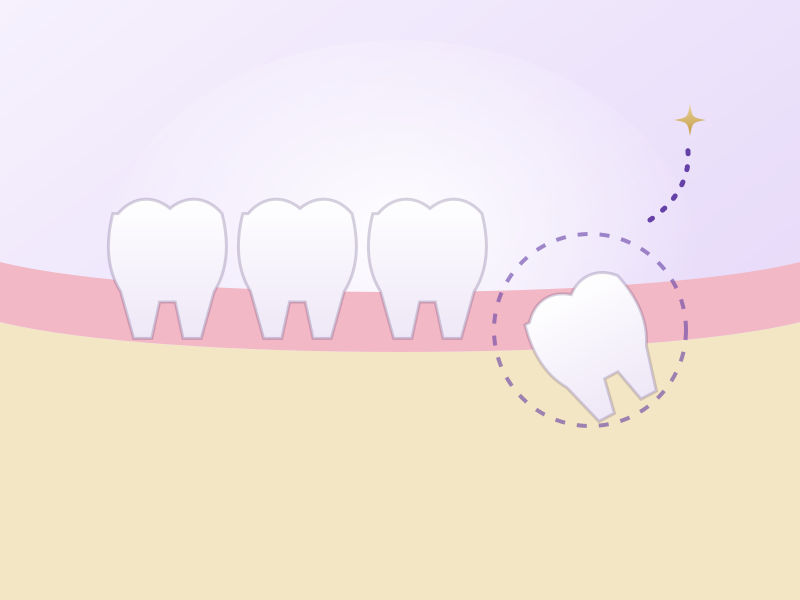
Wisdom teeth are the last molars, usually appearing between about 17 and 25 years of age. Some come through straight and cause no problems. Others are tilted or stay under the gum.
Signs of a problem
- Pain or swelling at the back of the jaw.
- Difficulty opening the mouth.
- A bad taste or smell near the tooth.
- Food trapped behind the last tooth.
- Problems that keep coming back.
Why an X-ray is needed
Only an X-ray shows how the tooth sits, the shape of its roots and how close it is to the nerve. A panoramic X-ray (OPG) is the usual choice.
When removal is usually discussed
- Repeated gum infection around a partly erupted tooth.
- Decay in the wisdom tooth or in the tooth in front of it.
- Damage or pressure on the neighbouring tooth.
- A cyst around an impacted tooth.
A healthy wisdom tooth that you can clean well can often stay.
Recovering after extraction
- Bite on gauze for 30 minutes.
- Use a cold compress on the cheek on the first day.
- Eat soft, cool food; avoid straws, smoking and hookah.
- From the next day, rinse gently with warm salt water after meals.
- Take medicines only as the dentist advises.
Severe pain that starts two or three days later can be a “dry socket” — call the clinic.
If swelling spreads towards the eye or neck, or you have difficulty swallowing or breathing, go to the emergency department. See dental emergency in Erbil.
Explore the positions on an X-ray view in the wisdom tooth explorer, or read about wisdom tooth treatment.

These articles are for general information and don’t replace advice from your dentist.
Ready when you are
Send a request online or message us on WhatsApp. We’ll confirm a time that suits you.
More tips
Dental X-rays and OPG: what they show and are they safe?
Why your dentist asks for an X-ray, the difference between a small X-ray and a panoramic OPG, and the radiation dose in plain words.
Read more
Dental emergency in Erbil: what to do right now
Toothache, swelling, a knocked-out tooth or bleeding after an extraction — clear first steps and when to go to hospital.
Read moreBad breath: the real causes and how to fix them
Most bad breath starts in the mouth. Simple steps to fix it — and signs that you should see a dentist.
Read more